
Jakarta. The Ministry of Higher Education, Science and Technology ( Kemdiktisaintek ) initiated the Living Lab program to encourage the application of science and technology in people’s daily lives.
This program will bring researchers closer to the community so that research results can provide solutions to problems faced in the environment.
The existence of the Living Lab not only opens up space for community involvement, but also includes industry, MSMEs and local government.
his program is also not like the Community Service Program (KKN) activities that students usually do.
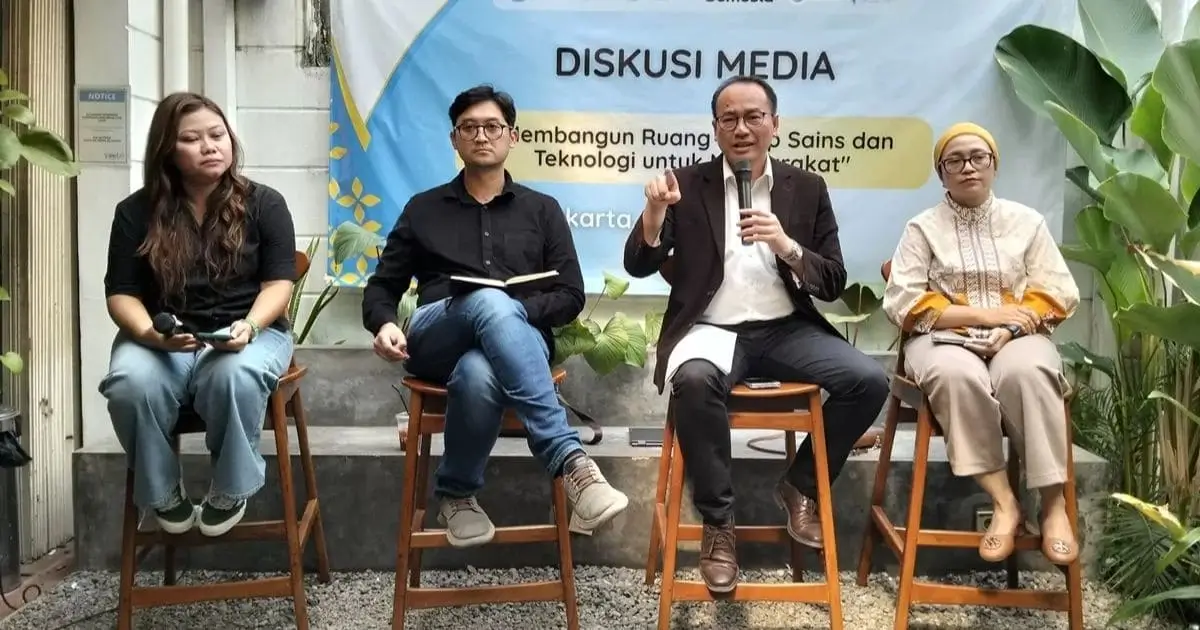
“This is different from the KKN program I experienced before. So, the concept is different, meaning scientists or researchers go into the field with the community to conduct joint research to understand what the problem is and what the solution is,” said English Literature Lecturer from Malang State University (UM) Evi Eliyanah, SS, MA, Ph.D., in a discussion titled “Building a Living Space for Science and Technology for the Community” organized by Fortadik and Kemdiktisaintek in Jakarta, recently.
Evi explained that the Living Lab program is not like KKN which tries to provide community service instantly within 6 weeks.
In addition to transferring knowledge to the community, in the Living Lab, the public will also be involved in evaluating and providing input or interventions to these programs.
“The key is engagement, so it’s not just a one-way top-down approach, not just participation, but engagement . That’s what makes the difference. That science itself is built and developed collaboratively with the community,” he said.
Therefore, it’s important to map out everything involved in the Living Lab, including its application, to avoid complaints that existing technology can’t be utilized, isn’t appropriate, or doesn’t align with local interests.
“This is to prevent research that disappoints the public, that’s what we hope,” he said.
Meanwhile, Luthfi Adam, a lecturer and historian at Monash University Australia, said the presence of the Living Lab would connect the community with solutions through existing researchers.
“So, from the beginning to the end, the community has been involved. Scientists are no longer disconnected from either industry or the communities who will use them,” he said.
Comments