
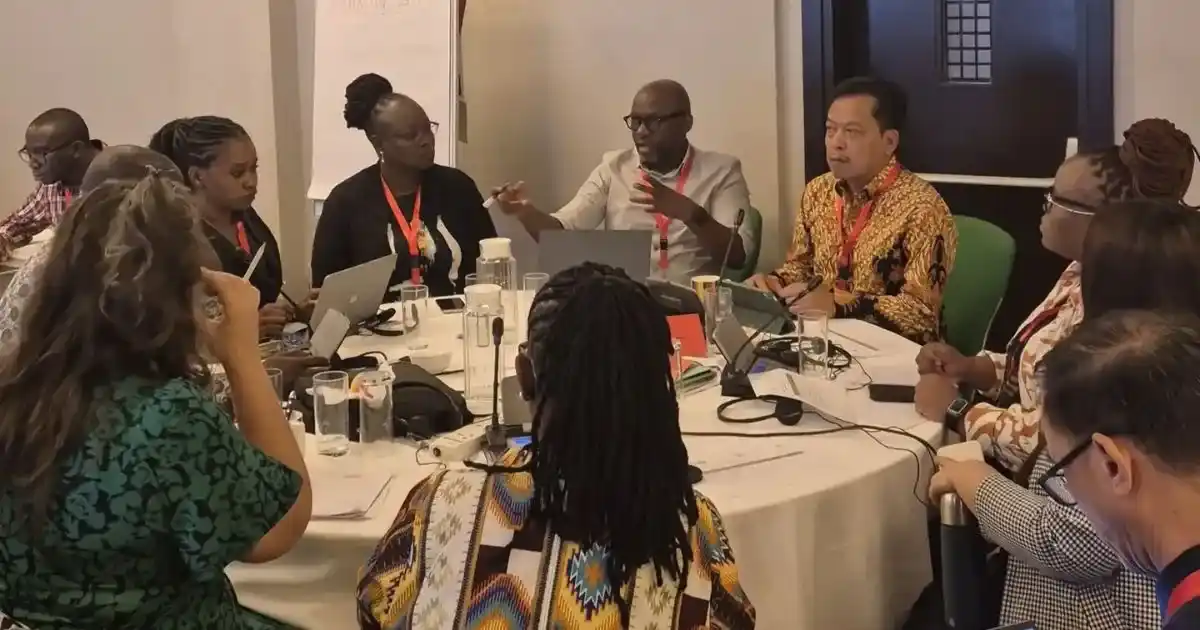
Jakarta. The Indonesian National Disaster Management Authority (BNPB) has reaffirmed its commitment to bolstering international cooperation in health systems and pandemic readiness. Representing Indonesia at the Communities in Pandemic Preparedness and Response (COPPER) conference in Nairobi, Kenya, from 27–29 October 2025, BNPB underscored the need for global solidarity and integrated disaster-health approaches.
From Crisis to Collaboration: COPPER 2025
At the event themed “From Crisis to Collaboration: Lessons from Community Engagement and Community-led Monitoring in Shaping Pandemic Preparedness and Response (PPR) in Resilient and Sustainable Systems for Health (RSSH)”, Indonesian delegates, including Acting Deputy for Prevention Drs. Pangarso Suryotomo, M.MB, and Wahyu Khresna from the Indonesia Positive Network, joined discussions hosted by the Global Fund and EANNASO.
The goal: to share lessons learned, scale community-led strategies, and deepen cross-border alignment on building resilient health systems capable of withstanding future pandemics.
Lessons from COVID-19: Disaster Management Meets Public Health
BNPB argues that COVID-19 taught a vital lesson: global health crises cannot be addressed by the health sector alone. Instead, they demand a disaster-risk management mindset—one that spans prevention, preparedness, emergency response, and recovery, involving all levels of government and society.
Under Indonesian law (Law No. 24/2007), pandemics are considered non-natural disasters. During COVID-19, for instance, response efforts were coordinated by a special task force under the president, led by BNPB.
Pangarso emphasized that integrating disaster-risk management with public health enables a more holistic and sustainable response framework:
“A disaster-management approach allows us to cover the full disaster cycle — from prevention and preparedness to emergency response and recovery — involving all actors in society.”
Climate Change: A Pandemic Multiplier
BNPB also flagged climate change as a compounding threat to health. Rising global temperatures, erratic weather patterns, and more frequent extreme events such as floods and droughts heighten the risk of vector-borne diseases like dengue, malaria, and zoonoses.
To address this intersecting challenge, BNPB supports the alignment of Resilient and Sustainable Systems for Health (RSSH) with Climate Change Adaptation (CCA). For instance, health systems must be resilient not only to pandemics but also to supply chain disruptions, food insecurity, and social instability driven by climate variability.
Strategic Recommendations for Global Resilience
As a result of its participation in COPPER, BNPB proposed three strategic priorities to strengthen national and global health resilience:
- Integrate Pandemic and Climate Risks into National Disaster Frameworks
BNPB recommends embedding pandemic preparedness and climate adaptation across all disaster management phases—from early warning to post-crisis recovery—with coordinated action at national, subnational, and local levels. - Establish an Inter-Institutional Coordination Platform
A proposed national platform would connect BNPB, the Ministry of Health, and community networks. This body would serve as a hub for real-time information sharing, cross-sector collaboration, and community participation in planning and response. - Develop Guidelines for Emergency Evacuation and Health Logistics
BNPB calls for clear protocols to ensure rapid, equitable access to essential health services and critical supplies during crises. This includes logistical strategies to maintain basic healthcare in disaster-affected areas.
A Global Call for Solidarity
Through its active engagement at COPPER, BNPB affirmed that sustainable resilience cannot be built by a single organization or country. Instead, it demands international solidarity, collaborative governance, and placing communities at the heart of preparedness strategies.
According to Pangarso, “resilience is not built by one institution or country, but through solidarity, synergy, and care across nations.”
In BNPB’s view, achieving lasting resilience means combining disaster risk reduction, climate adaptation, and equitable health systems — anchored by empowered communities and cross-border cooperation.
Comments