
Education. Indonesia continues to face a persistent education–work mismatch. Many university graduates enter the job market only to find roles that do not align with their academic background.
This gap is widening, especially in regions like Yogyakarta, where higher education institutions are expected to prepare graduates for an increasingly competitive labor market.
Youth Unemployment and Vertical Mismatch
Official national data shows that youth unemployment is nearly double the overall unemployment rate. A key driver is vertical mismatch, where more than one-third of young workers occupy jobs unrelated to their education level. This misalignment leads to wage stagnation, lower productivity, and slower career progression.
Graduates categorized as “overeducated” may accept lower-skilled jobs, while “undereducated” workers struggle even more to secure stable employment. These issues demonstrate a systemic disconnect between education providers and industry needs.
Why the Mismatch Happens
Agustinus Subarsono, a public policy expert from Gadjah Mada University (UGM), highlights several root causes:
- Imbalanced labor supply: Too many graduates choose similar fields, creating oversaturation.
- Competency mismatch: Curricula often fail to reflect real industry requirements.
- Slow job creation: Limited investment and sluggish economic growth reduce new employment opportunities.
- Low entrepreneurial drive: Graduates tend to seek traditional jobs rather than create new ones.
What Universities Should Do
To address this, Subarsono recommends strategic reforms:
- Curriculum Alignment with Industry
Universities should regularly survey employers and revise programs to match market expectations. - Tracer Studies
Tracking alumni career paths can reveal the actual skills graduates need. - Global Benchmarking
Adopting best practices from international universities strengthens program relevance. - Mandatory Internships
Partnerships with government, NGOs, and industries can help students gain professional exposure. - Experiential & Project-Based Learning
Workshops, case studies, and real-world projects enhance practical competency. - Cross-Sector Collaboration
Cooperation between government, universities, philanthropy, and industry can accelerate policy and curriculum improvement.
Soft Skills as the Competitive Advantage
Subarsono emphasizes that graduates must master soft skills—communication, problem-solving, teamwork, and adaptability. In today’s dynamic workplace:
- Teams increasingly require collaboration across disciplines.
- Rapid technological changes demand agility and resilience.
- Employers value character traits like integrity, empathy, and discipline.
- Strong communication builds trust and enhances productivity.
These skills help graduates thrive beyond academic achievement.
Developing Leadership Early
Leadership, according to Subarsono, begins with self-awareness and a willingness to grow. Student organizations, community initiatives, and internships offer real environments to practice decision-making, coordination, and responsibility.
Historical leaders such as Sukarno and Mohammad Hatta developed their leadership foundations during their student years—showing that early experiences shape future impact.
In contrast, today’s “strawberry generation” faces challenges such as misinformation and low resilience. Structured leadership programs are essential to build adaptability and critical thinking.
TELADAN Scholarship: A Model for Soft Skills Development
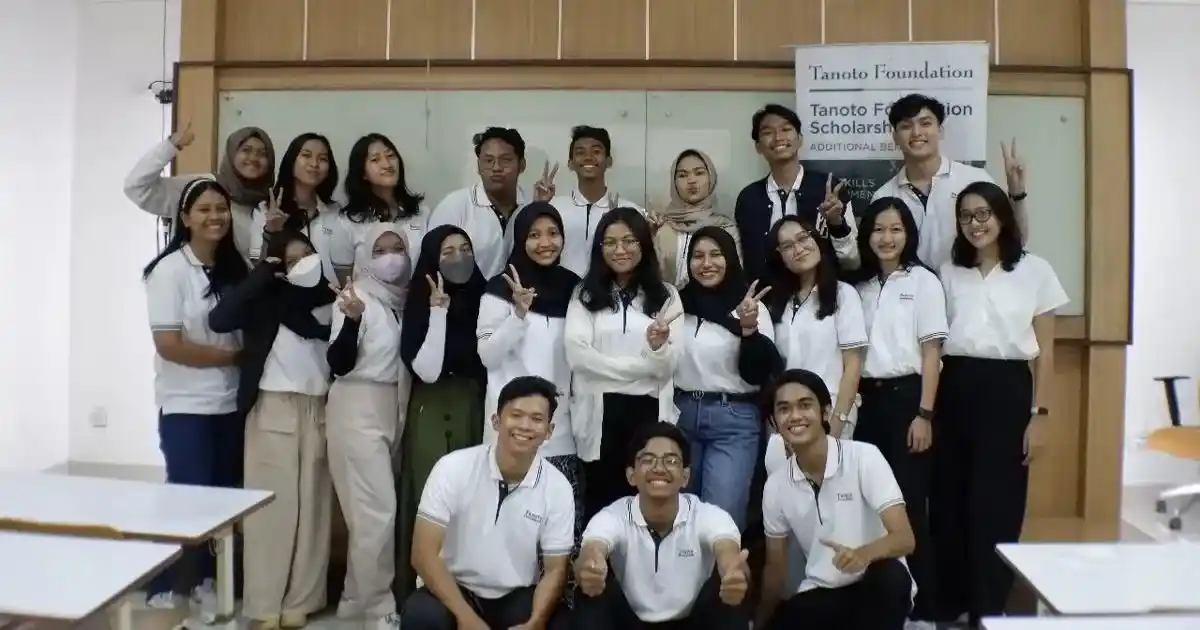
The Tanoto Foundation’s TELADAN Leadership Scholarship provides an example of how philanthropy supports youth development. Launched in 2019, the program offers financial support combined with leadership and soft-skill training.
TELADAN focuses on nine essential traits: self-awareness, grit, integrity, empathy, innovation, continuous learning, empowerment of others, drive, and entrepreneurial spirit.
Its results are promising:
- 27% of alumni obtain higher-level jobs.
- 47% experience higher income mobility.
This demonstrates the program’s role in improving employability and social mobility.
Voices from TELADAN Scholars
Several scholars shared how the program transformed their personal and professional growth:
- Lintang Sekar Jagad, a Public Policy student at UGM, said TELADAN built her resilience, growth mindset, and self-awareness through mentoring and leadership development.
- Rafael David Santoso, a chemical engineering student, learned how to better understand his strengths and navigate academic challenges with confidence.
The scholarship’s three-year structure—Lead Self, Lead Others, Career Preparation—equips students for real-world success.
Universities Recognize the Need for Change
UGM’s Director of Student Affairs, Hempri Suyatna, supports soft-skill integration within the curriculum. He notes that GPA alone is no longer the core hiring metric; employers now prioritize readiness, communication, and leadership capabilities.
To achieve this, universities must move beyond standalone workshops and adopt structured, sustained leadership programs.
Comments