
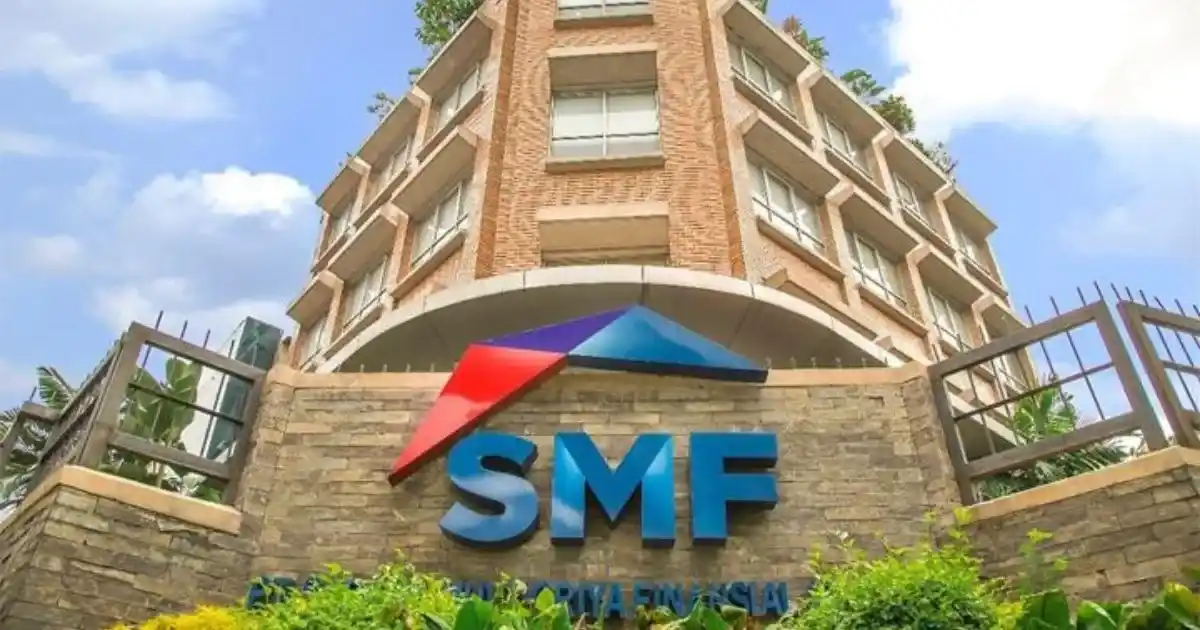
DKI Jakarta. PT Sarana Multigriya Finansial (SMF) may see a drop in its bond funding costs after its corporate bonds become acceptable as collateral in Bank Indonesia’s (BI) underlying repurchase (repo) operations.
This development is expected to strengthen SMF’s ability to support its subsidized mortgage financing (FLPP) program, according to SMF executives.
Lower Cost of Funds Through Repo Access
Martin D. Siyaranamual, Head of Economic Research at SMF, stated that with SMF bonds now eligible for BI’s repo operations, the company’s cost of funds could decline.
Currently, SMF’s bond yields trade at a spread of around 100–150 basis points (bps) over sovereign bonds (SBN). With the repo facility in place, SMF can theoretically offer lower spreads—potentially around 80 bps—which would directly reduce its funding cost.
Boosting FLPP Leverage
As SMF’s cost of funds declines, the company gains more capacity to leverage its FLPP financing. FLPP is Indonesia’s national housing program for subsidized mortgages.
Currently, SMF contributes about 25% of the co‑financing for FLPP loans. By reducing its funding cost, SMF may increase this portion, which could in turn drive higher disbursement volumes for subsidized mortgages.
Strengthening Long-Term Bond Market Liquidity
Repo access for SMF bonds is also expected to improve liquidity in the long-term bond market. According to SMF, investors who were previously less interested in long-tenor bonds (10, 15, or 20 years) may now be more open to purchasing SMF’s long-term debt.
The reason: banks holding SMF bonds can quickly repo them to BI, giving them a liquid exit option. This additional exit channel can make SMF bonds more attractive, contributing to stability in the banking system’s liquidity and improving the banks’ liquidity coverage ratios.
BI’s Criteria and Strategic Expansion
Bank Indonesia has set strict criteria for which securities it will accept as underlying collateral in repo operations. Eligible instruments must be high-quality liquid assets (HQLA): they need a strong credit rating, active trading, the ability to be sold, not being encumbered, and being held in the central bank’s operation accounts.
SMF bonds (both conventional and sharia) meet these criteria, making them the first corporate bonds accepted under this expanded repo policy. BI’s move marks a shift from relying solely on government securities (SBN) for its repo operations.
BI’s broadening of accepted underlying collateral aims not only to deepen liquidity in the banking sector but also to foster the development of non-government securities markets.
Implications for National Housing
SMF’s lower funding costs and improved liquidity could accelerate the flow of funds into Indonesia’s national housing program, which targets the construction of three million houses.
Heliantopo, SMF’s Business Director, noted that repo access gives investors confidence because SMF bonds come with a liquid exit mechanism via BI.
Currently, only SMF’s conventional and sharia bonds are accepted for repo, but SMF hopes that asset-backed securities (EBA) could also qualify in the future, should they achieve sufficient liquidity and quality.
Conclusion
Allowing SMF bonds to serve as collateral in BI’s repo operations could bring multiple benefits: reducing SMF’s funding costs, strengthening its role in subsidized housing financing (FLPP), and enhancing liquidity in Indonesia’s long-term corporate bond market. For SMF and the broader housing sector, this policy shift could be a significant step toward more efficient and sustainable financing.
Comments