
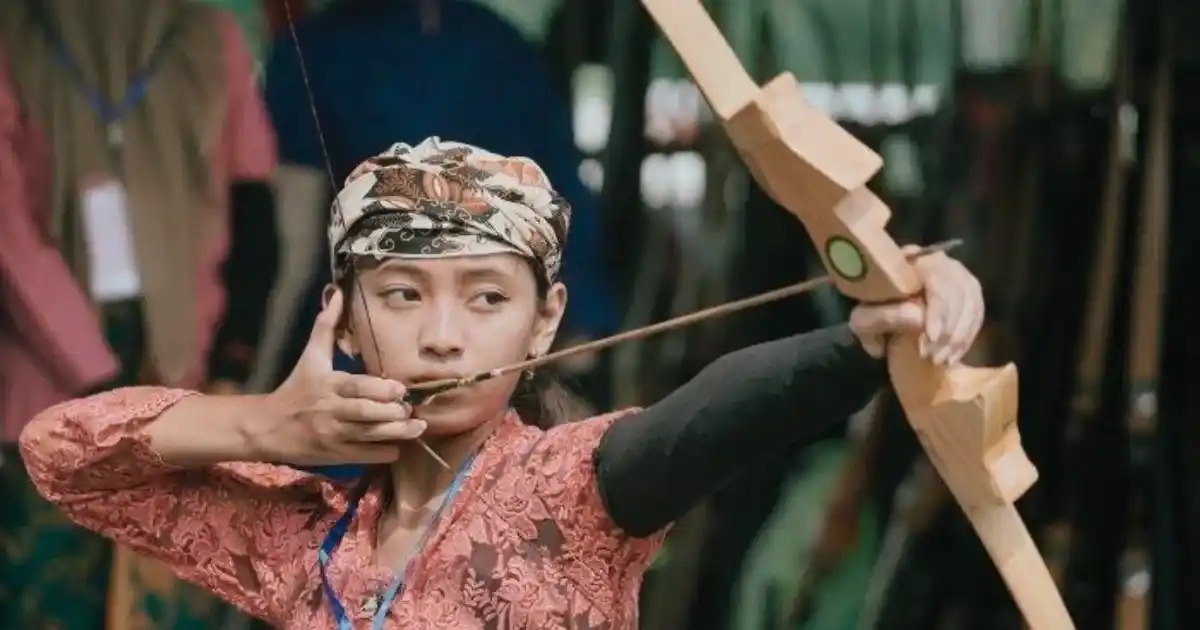
Yogyakarta. In the quiet countryside of Kulon Progo, Yogyakarta, a renewed interest in the traditional Javanese archery sport of jemparingan is breathing new life into local craftsmanship. What once served as a cultural pastime is now becoming an export success story — and a vehicle for character development.
A Local Craft Goes International
In Dusun Ngulakan, Kalurahan Hargorejo, Kapanewon Kokap, Kulon Progo, artisan Joko Triyanto has turned his workshop into a hub for handcrafted jemparingan equipment. In September, he received an order of 15 units destined for Switzerland — a milestone marking the sport’s growing global appeal.
For Joko, the journey began in 2012 — motivated by a desire to steer local youth away from online games and dangerous motorbike stunts. His solution: revive jemparingan and turn it into “real game” and character education.
“Why jemparingan? Because archery is a sport without rage, without defeating someone else; rather it requires you to manage your own emotion,” he explains.
He also sees spiritual alignment: archery is a form of exercise recommended in Islam, which added meaning to his mission. (detikcom)
The Craftsmanship Behind the Bow (Gendewa)
At Joko’s workshop, the process starts with wood: Sono Keling, Sawo, Johor, Besi, and Ebony are used as materials for the gendewa (bow) and arrows.
Steps include:
- Cutting the wood to match the height of the buyer.
- Constructing the bow by combining wood, bamboo, and string to form the gendewa.
- Character adaptation: The most challenging part is tailoring the draw and feel of the bow to the personality of the user.
One key technique is embat — thinning different parts of the bamboo to change the speed and behavior of the arrow. For instance, a quick-tempered shooter may get a bow that is easier to use; a patient one may get a stiffer bow.
Production is exceptional for a small workshop: in a six-month period, they typically make 10 to 20 gendewa and about 25 dozen arrows.
They market via social media (Facebook), word-of-mouth, and partnerships with schools and local institutions — yet their reach already stretches beyond Java, to Kalimantan Utara, Kalimantan Timur, Sumba, Toba, and abroad.
Pricing: A set of gendewa ranges from ~Rp 350,000 to Rp 1,200,000 depending on material and quality; arrows are sold per dozen at ~Rp 400,000 to Rp 800,000.
Cultural Preservation and Growth of Jemparingan
The revival of jemparingan isn’t just about sport — it’s about preserving a cultural legacy. Once restricted to the royal courts of the Sultanate of Yogyakarta and the Kadipaten of Pakualaman before the 1990s, jemparingan (in the Mataram style) has now opened to the public.
In 2017, the first Jemparingan Congress was held in Kulon Progo, establishing the area as a national barometer for this traditional archery.
Today, jemparingan groups (paguyuban) are emerging across Indonesia, emphasizing various goals—religious practice (since archery is Sunnah), cultural education, sport, and tourism attraction.
Comments