
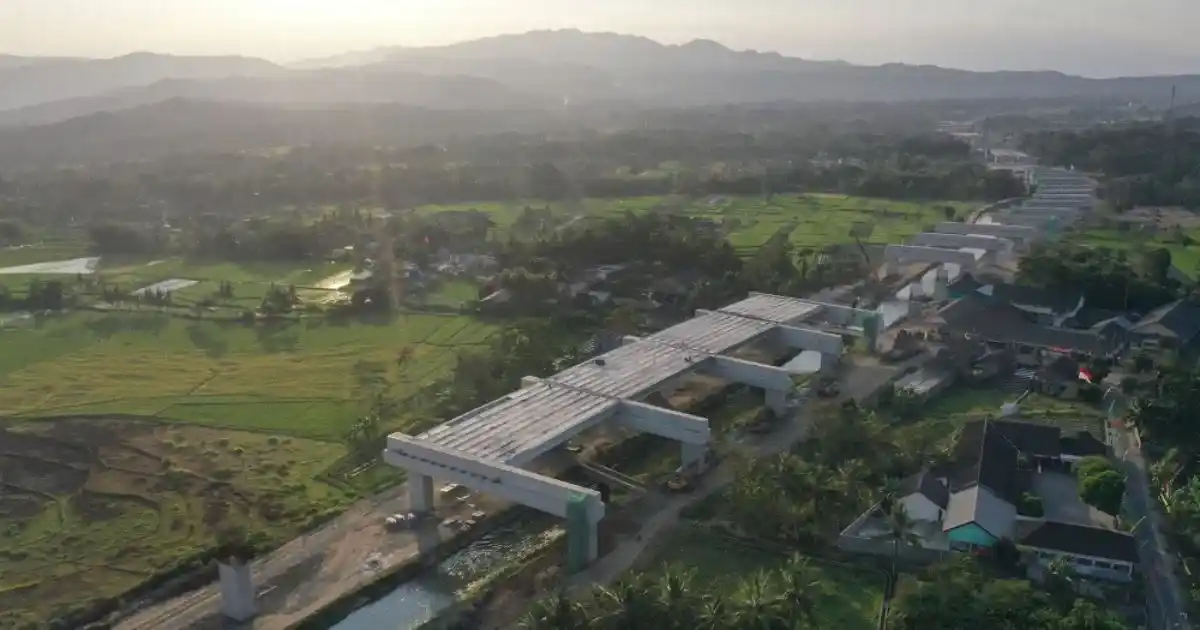
Yogyakarta. The development of the Jogja‑Bawen Toll Road Section 6 is charging ahead, particularly at the Exit Bawen segment, thanks to the adoption of modern construction technology.
According to a recent report, construction crews installed 40-metre long beams at the Exit Bawen site using a gear-launcher system. This innovative approach not only speeds up the construction process but also enhances worker safety and precision.
Project Overview
The Jogja-Bawen Toll Road is part of the national toll network linking Yogyakarta to Semarang through Central Java.
Within this corridor, Section 6—between Bawen and the Ambarawa Interchange—is a key link, offering improved access to the Solo-Semarang route.
This stretch spans approximately 14 kilometres and is designed with four lanes to accommodate the growing volume of vehicles.
The goal: significantly reduce congestion on the old route which has long been the primary passage for traffic to and from Solo and Semarang.
On-site Progress
At the Ambarawa-Bawen main road, Jalan Kartini and Jalan Sudirman, widening works are underway. The area around the Pasar Pon Ambarawa market has even seen building demolitions to support the expansion toward the toll exit.
Observers via the YouTube channel “MasDon Channel” on 30 October 2025 captured the transformation in progress.
Technology and Benefits
The use of the gear-launcher for beam installation accelerates construction timelines by enabling the placement of large straight beams more efficiently and precisely. Integrating modern methods also serves to boost worker safety and ensure that project standards are met.
By shortening delays and improving working conditions, this approach supports timely delivery and quality of the toll road’s infrastructure.
Strategic Impact
Once completed, Section 6 is expected to ease traffic flow significantly, reduce travel time and support logistics distribution across the region. For local economies and national connectivity alike, the toll segment is a strategic asset. The four-lane design caters to increased automotive demand and improves links to major intercity corridors.
In the broader picture, this project underscores the value of modern infrastructure technology in delivering infrastructure more quickly and effectively.
Comments