
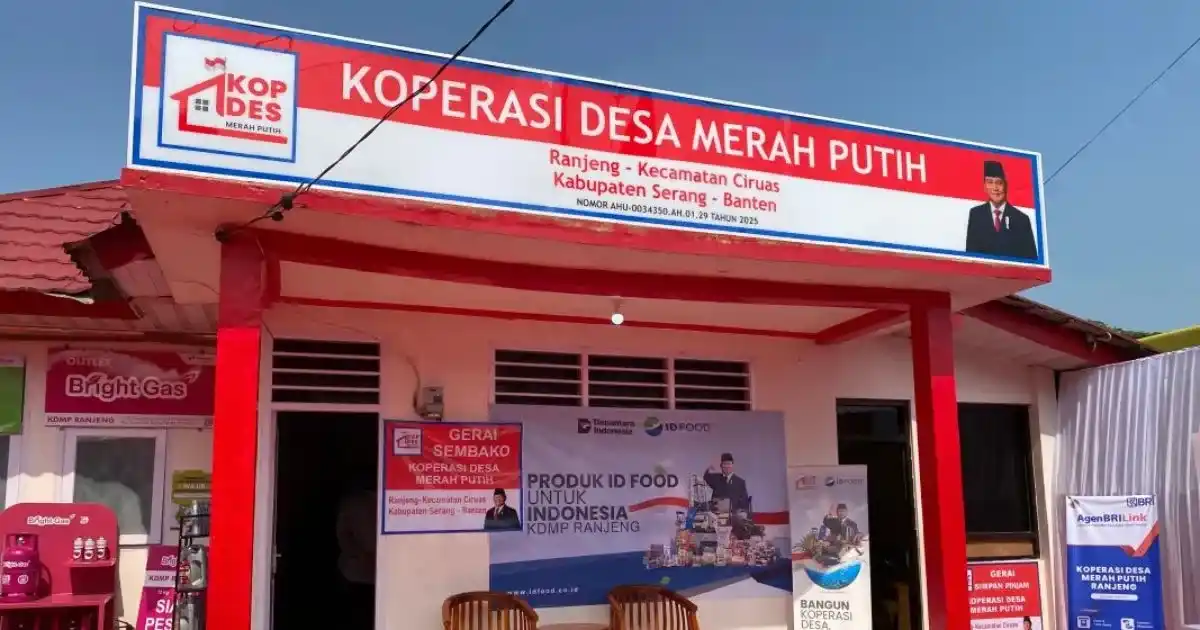
Indonesia. The Ministry of Cooperatives (Kemenkop) is accelerating the operational rollout of the Kopdes Merah Putih (Red & White Village Cooperatives) initiative by launching a hands-on internship program for cooperative leaders.
The week-long internships combine classroom briefing, study visits and on-the-job training to help village cooperatives build sustainable business ecosystems and market linkages.
At the opening event held at the Al-Ittifaq Islamic Boarding School Cooperative (Kopontren Al-Ittifaq) in Ciwidey, Bandung Regency, Deputy for Talent Development and Cooperative Competitiveness Destry Anna Sari explained that the program is meant to deepen cooperative managers’ practical skills and strengthen partnerships with institutions such as the National Committee for Sharia Economy and Finance (KNEKS), the PUM (Programma Uitzending Manager) Representative Indonesia, and local universities.
The first batch of the agricultural sector internship ran from 15 to 22 November 2025, taking place at six host locations including Kopontren Al-Ittifaq — a model of integrated agribusiness combining production, management and professional marketing. The batch in Ciwidey included 38 participants representing districts across four provinces (West Java, Banten, Yogyakarta Special Region, and Central Java). In total, the program will train 114 participants from 24 provinces, divided into three batches of 38 each.
Destry highlighted Al-Ittifaq’s agribusiness system as a practical classroom where interns learn the full value chain — from upstream cultivation to downstream sales — and how to connect cooperative products to modern retail channels such as supermarkets. Beyond technical farming skills, the internship emphasizes community empowerment, managerial discipline, entrepreneurship, and market-oriented product management.
By exposing cooperative managers to a working model of integrated agribusiness and by fostering networks between host cooperatives, participants and institutional partners, Kemenkop aims to seed an entrepreneurial “DNA” across Kopdes Merah Putih. The ministry expects graduates of the internship to replicate successful business models at home, form inter-cooperative partnerships, and act as local aggregation and operational hubs that drive village economies.
Why this matters: strengthening the managerial and market skills of cooperative leaders can turn village cooperatives into viable business aggregators — improving farmer incomes, formalizing market access, and strengthening rural economies. The program’s mix of study visits and on-site practice is designed to fast-track that capability building.
Comments