
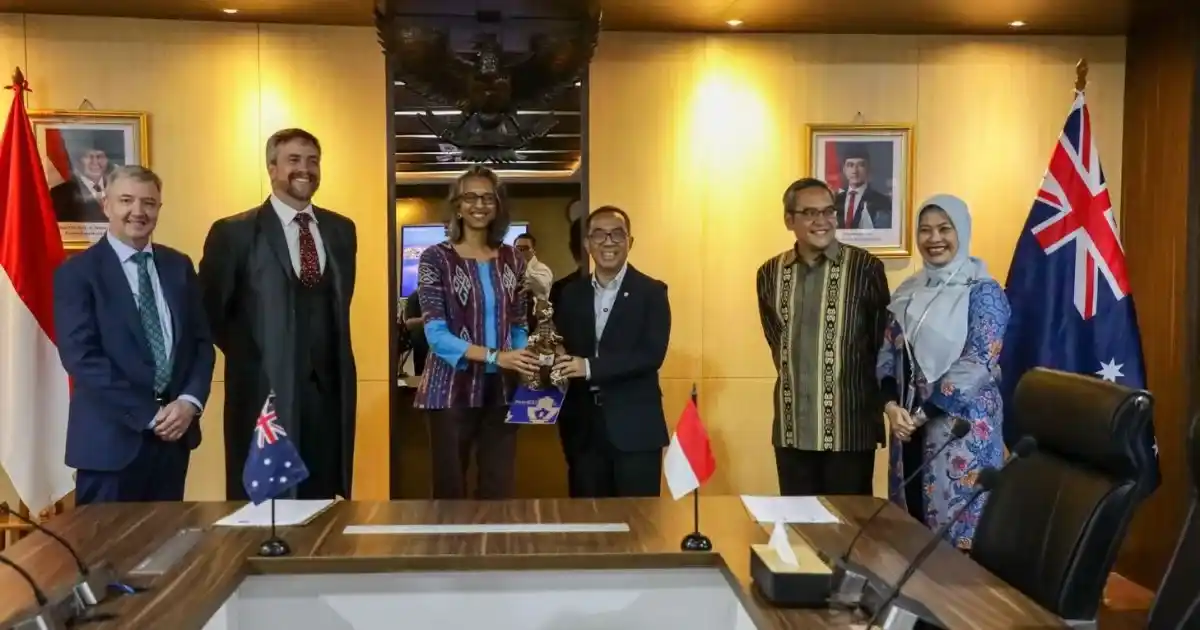
Jakarta. Indonesia’s Ministry of Higher Education, Science, and Technology (Kemdiktisaintek) has taken a significant step by engaging with Australia’s University of New South Wales (UNSW) to deepen collaboration across higher education, research, and the university-based startup ecosystem.
This strategic dialogue holds promise for amplifying innovation, strengthening academic links and nurturing the next generation of entrepreneurial talent.
1. Strategic Dialogue and Collaboration Scope
During a recent discussion, Kemdiktisaintek and UNSW explored a variety of cooperation opportunities:
- Enhancing higher education programs, including student exchanges, joint curricula and faculty mobility.
- Expanding research partnerships across priority areas that support Indonesia’s development agenda.
- Building a vibrant university-based startup ecosystem, leveraging UNSW’s experience in innovation hubs and Indonesian universities’ local strengths. (kemdiktisaintek.go.id)
This multi-pillar approach signals a commitment not only to academic collaboration but also to real-world impact through startups and innovation.
2. Why This Partnership Matters
- For Indonesia: the initiative aligns with the national agenda of strengthening higher education and research capabilities, and accelerating startup growth.
- For UNSW: collaboration offers deeper linkages in Southeast Asia, access to emerging talent and innovation markets.
- For both parties: the synergy taps into global trends in “university-industry-startup” ecosystems, where research, teaching and entrepreneurship increasingly converge.
Recent literature underscores the importance of industry-academia and startup ecosystems in driving innovation and socioeconomic development. (arXiv)
3. Key Focus Areas and Potential Actions
Based on available information, key focus areas likely to be pursued include:
- Joint research centers or labs in strategic fields (e.g., science, technology, innovation) that align with national priorities.
- Startup incubation or acceleration programmes hosted by universities, drawing on UNSW’s startup ecosystem model and Indonesian campuses’ local context.
- Education pathways that prepare students for entrepreneurial careers: blended programmes, mentorship, global exchange.
- Knowledge and technology transfer mechanisms between academia and industry, to turn research outcomes into startup ventures or industry applications.
4. Challenges & Success Factors for Implementation
To ensure the collaboration succeeds, the following factors will be crucial:
- Clear governance and joint-management frameworks for the partnership.
- Sustainable funding and resource commitments from both sides.
- Alignment of research and startup initiatives with Indonesia’s national priorities and local needs.
- Effective mechanisms to monitor impact and scale-up startup growth and research translation.
Experience shows that without active co-creation and alignment between academia and industry/startups, collaboration can stall. (arXiv)
5. Implications for Indonesia’s Innovation Landscape
If effectively executed, this partnership can drive several positive outcomes for Indonesia:
- Stronger international linkages in higher education and research, boosting global competitiveness.
- A more dynamic startup ecosystem anchored in universities, leveraging local talent and research output.
- Higher impact of research via commercialization and startup creation, supporting the broader innovation economy.
- Enhanced capacity of higher education institutions to deliver entrepreneurship-oriented learning and research.
Conclusion
The dialogue between Kemdiktisaintek and UNSW marks an important milestone for Indonesia’s efforts to strengthen its higher-education system, research capabilities and startup ecosystem. By capitalising on UNSW’s international experience and Indonesia’s growing innovation potential, this collaboration can serve as a catalyst for transformational change—bridging academia, industry and entrepreneurship in a unified ecosystem of impact.
Comments