
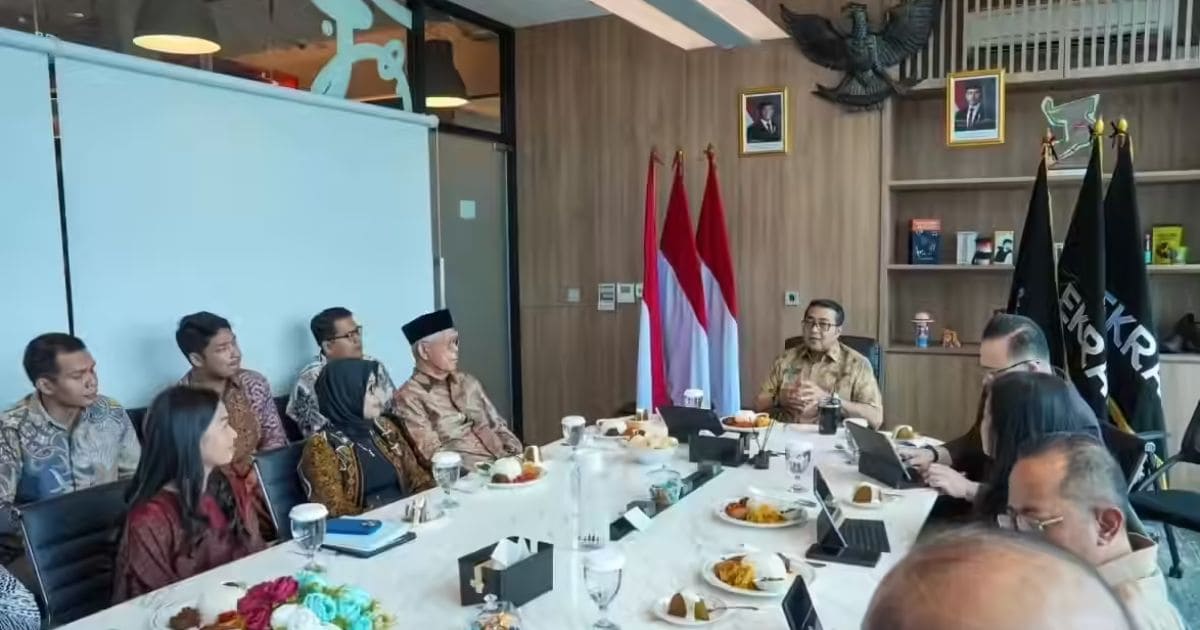
Jakarta. Minister of Creative Economy Teuku Riefky Harsya revealed that culinary arts are one of the most promising creative economy sectors. Local cuisine, a legacy of Indonesian flavors, can serve as a medium for Indonesian cultural diplomacy abroad.
In this regard, Teuku Riefky supports the strategic move by the Sederhana Restaurant Group, Indonesia’s most popular Padang restaurant brand, to expand its culinary offerings into the international market. Founded by Bustaman in 1972, the restaurant plans to open new branches in several countries in the near future.
“We are focusing on seven priority subsectors, including culinary, without neglecting other sectors. When we heard that Restoran Sederhana wanted to go global, we realized this would certainly bring Indonesia’s brand, culture, and diplomacy to the world stage,” Riefky said in a statement on Thursday (October 2).
According to Antara , the Sederhana Group Restaurant is in dialogue with the Ministry of Creative Economy to discuss global expansion plans. The restaurant plans to open branches in several countries, including Germany and Australia.
Teuku Riefky further explained that the potential collaboration between the Ministry of Creative Economy and Restoran Sederhana aligns with the Asta Ekraf program. The collaboration will encompass database strengthening, talent development, intellectual property protection, and synergy across ministries and institutions to strengthen the Indonesian culinary ecosystem abroad.
“In terms of intellectual property, we have collaborated with the Ministry of Law and also signed an agreement with WIPO under the UN. This means that protection for Indonesian culinary brands can apply globally,” said Riefky.
“We are also coordinating with the Ministry of Trade and the Ministry of Foreign Affairs to support the expansion of Indonesian culinary arts as cultural ambassadors ,” he added.
Restaurant Sederhana representative Nova Dana Eka Putri outlined the main goals she hopes for in Sederhana’s global expansion. She hopes for support in the export of spices and raw materials, which are often hampered by regulations in destination countries, brand protection to maintain the restaurant’s identity, and international promotional and media support to strengthen its exposure as an Indonesian culinary icon.
“Furthermore, we also need guidance on potential countries for expansion. Our goal is for Sederhana to become a representative of local culinary culture that is widely recognized internationally,” said Nova.
Comments