
Environment. Indonesia has marked a global milestone by launching the world’s first technology‑based international carbon trading scheme under Article 6.2 of the Paris Agreement, in collaboration with Norway.
A Historic Partnership at COP30
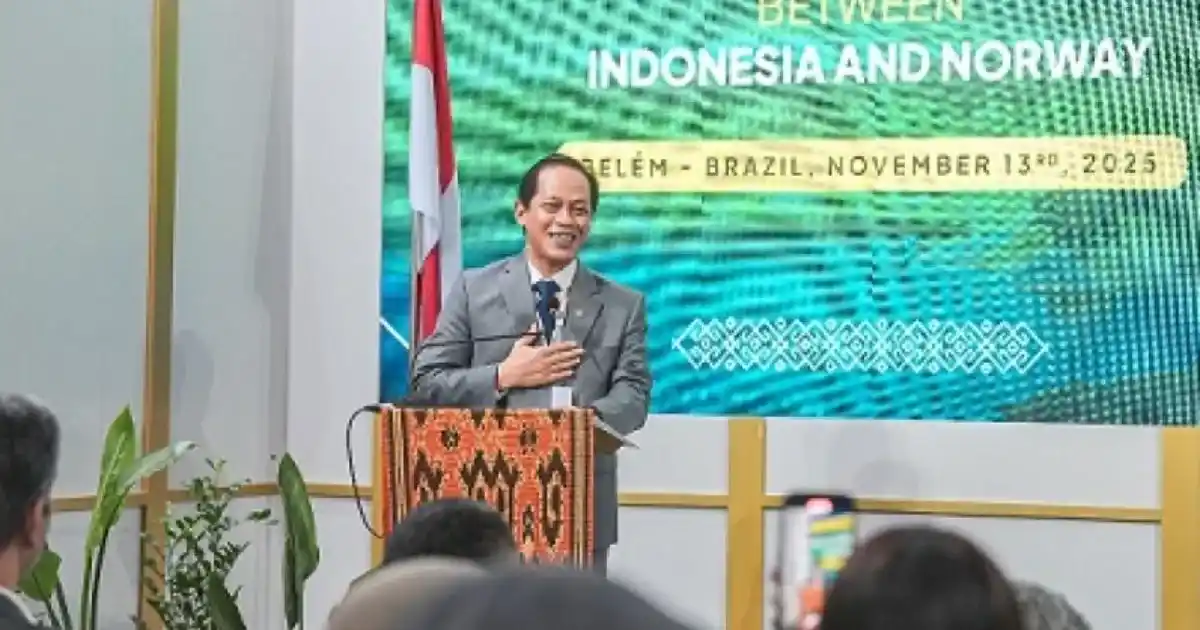
On November 13, 2025, during COP 30 in Belém, Brazil, Indonesia and Norway formalized a landmark agreement. The deal empowers Indonesia to transfer mitigation outcomes—specifically, 12 million tonnes of CO₂ equivalent—to Norway.
This achievement underscores Indonesia’s ambition to lead in high‑integrity carbon markets, signaling a shift in its climate diplomacy.
Framework Built on Technology and Transparency
At the heart of this breakthrough is a Framework Agreement signed by PT PLN (Persero) and the Global Green Growth Institute (GGGI).
This agreement is part of the Generation-Based Incentive (GBI) programme, which rewards renewable energy generation, and sets the stage for a Mitigation Outcome Purchase Agreement (MOPA) expected by December 2025. If executed, Indonesia would become the first country to operationalize a technology-based carbon trade under Article 6.2.
From Nature‑Based to Technology‑Driven Solutions
Previously, Indonesia–Norway cooperation focused on Nature-Based Solutions (NBS), especially forest conservation, under a result-based contribution (RBC) scheme. That effort has yielded about USD 260 million to date.
Now, this partnership is evolving. By channeling emissions reductions from clean energy projects (hydropower, solar, wind), Indonesia is diversifying into a technology‑based emissions market.
Integrity, Inclusion, and Economic Value
Indonesian Environment Minister Hanif Faisol Nurofiq emphasized that this deal is not just a one-off: it’s the start of real, meaningful implementation.
The government is committed to a carbon market that is transparent, high-integrity, and benefits local communities and the environment.
Economically, this transaction could be worth up to USD 350 million, based on the value of the 12 million tonnes of emissions reductions.
Driving Indonesia’s Net-Zero Ambition
This deal also amplifies Indonesia’s ambition to reach Net Zero Emissions (NZE) by 2060—or sooner.
It aligns with Indonesia’s Second Nationally Determined Contribution (NDC), which includes a targeted emissions reduction of 1.2–1.5 Gt CO₂e by 2035, a 23% renewable energy share by 2030, and accelerated development of clean energy technologies.
A Model for the Global Carbon Market
Through a robust national registry system, measurement, reporting, and verification (MRV) standards, and strong authorization mechanisms, Indonesia aims to ensure that every traded emission unit is credible and traceable.
The MOPA and GBI Programme Rules being negotiated with Norway will further institutionalize these high-standards.
Comments