
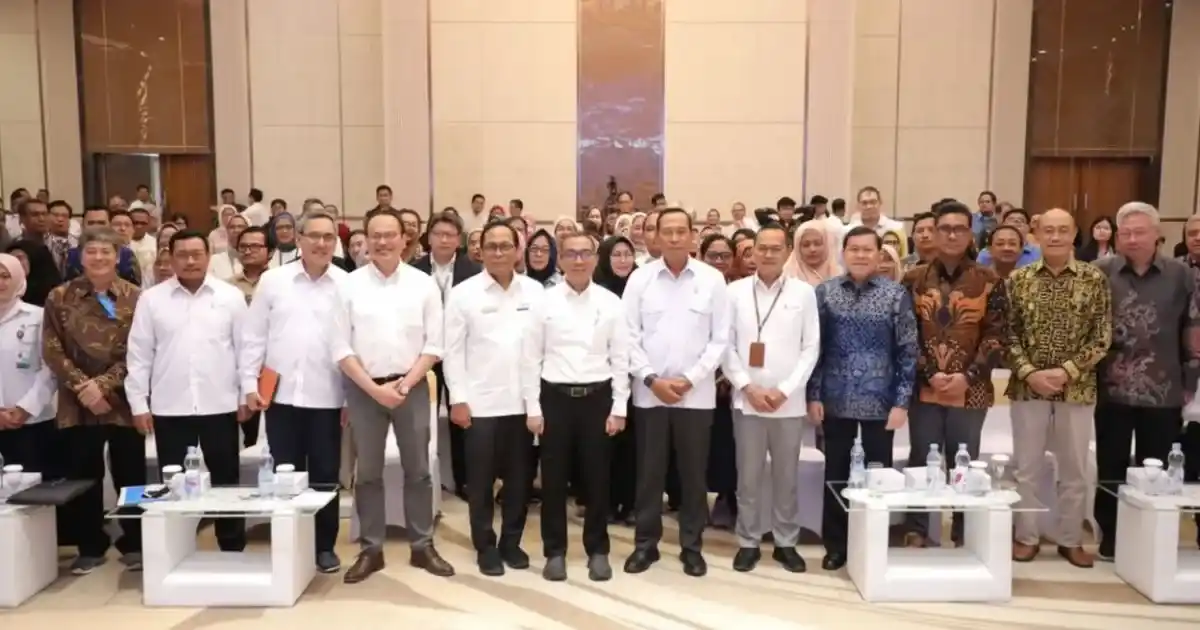
Jakarta. The Ministry of Education and Science and Technology (Kemdiktisaintek) together with the Education Fund Management Institute (LPDP) has launched Bestari Saintek, a new initiative aimed at strengthening Indonesia’s science and technology ecosystem through collaboration, innovation, and research utilization.
This program, officially named the Science and Technology-Based Living Ecosystem Program, reflects the government’s commitment to ensuring that research results go beyond academic journals and transform into tangible innovations with economic and social value.
“We want every research result to become a real innovation that can be used by society. With patience and perseverance, academic strength will produce future champions,” said Minister of Higher Education, Science, and Technology Brian Yuliarto in Jakarta.
A Collaborative Framework for National Innovation
The Bestari Saintek program is part of the broader initiative called Semesta (Community and Academic Creative Synergy for Nusantara Science and Technology). It is built upon five key pillars:
- Multi-stakeholder collaboration
- Real problem–based research
- Co-creation
- Continuous iteration
- Measurable economic impact
According to the Director General of Science and Technology, Ahmad Najib Burhani, the program’s success depends on collaboration between universities, industry players, local governments, and communities. Universities act as knowledge centers, industries strengthen the supply chain and markets, while communities become both contributors and beneficiaries.
“We hope the resulting innovations will be effective and have direct economic impact, from improving local product quality to expanding market access,” Najib said.
Driving Real-World Impact Through Science and Technology
Director of Science and Technology Dissemination, Yudi Darma, emphasized that Bestari Saintek serves as a bridge to bring research out of the laboratory into the community. It is envisioned as a living laboratory — a collaborative space where universities, industries, MSMEs, and community groups co-create science-driven solutions.
“We invite all stakeholders to make Bestari Saintek a collaborative platform for brilliant ideas that lead to one goal: building a vibrant, inclusive, and prosperous science and technology ecosystem for the nation,” Yudi added.
Government Support and Research Funding
To support this initiative, LPDP allocated Rp57.5 billion for the Bestari Saintek innovation program. This funding aims to improve the national research, science, and innovation ecosystem while ensuring that research outcomes translate into real benefits for the public.
Although Indonesia’s research productivity and position in the Global Innovation Index continue to rise, the government recognizes that practical community impact remains limited. The Bestari Saintek science and technology ecosystem seeks to close this gap by turning scientific achievements into applied innovations that improve lives and strengthen economic resilience.
A 2025 report by Nature Human Behaviour found that public trust in Indonesian scientists scored 3.84 out of 5, surpassing the global average. This strong trust foundation provides momentum for initiatives like Bestari Saintek to connect researchers, industries, and society in meaningful ways.
Bestari Saintek marks a pivotal step in transforming Indonesia’s research landscape — from isolated studies to collaborative innovations. By fostering synergy between academia, government, and the private sector, this initiative builds the foundation for a sustainable national innovation ecosystem that benefits all.
Would you like me to also include image alt-text suggestions and captions (optimized for SEO) to accompany this post? They help Yoast improve your image SEO score and Google Discover visibility.
Comments