
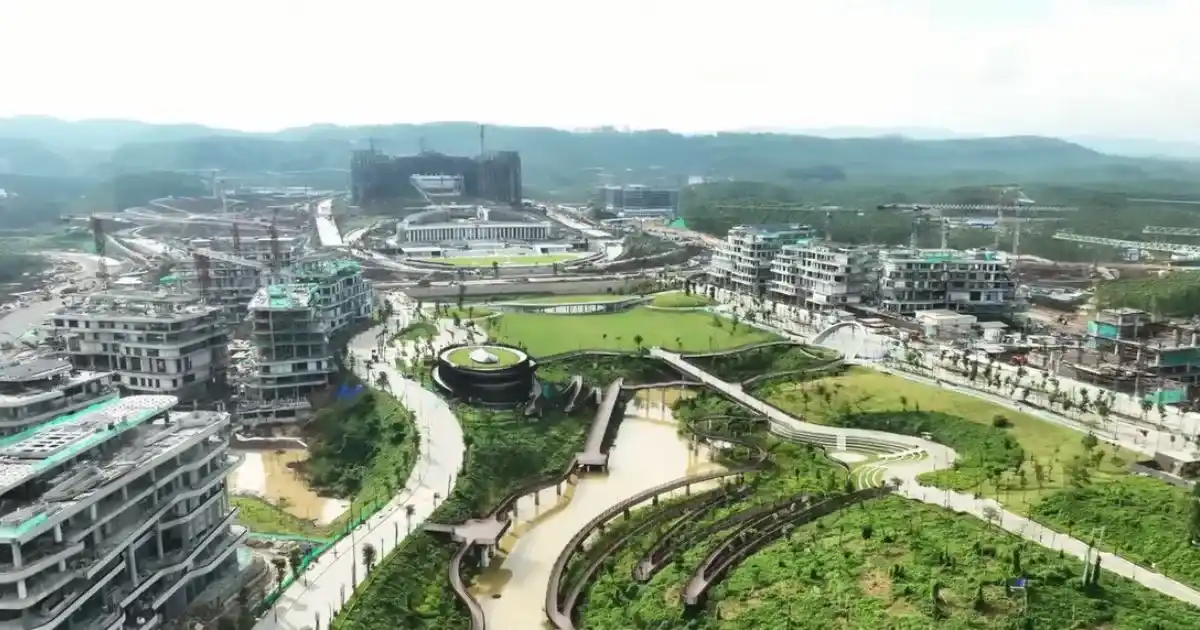
Nusantara. The Nusantara project, Indonesia’s ambitious new capital city located in East Kalimantan on the island of Borneo, continues to move forward, with the government reaffirming its goal of achieving full “political capital” status by 2028.
According to Nusantara Capital Authority (NCA) Head Basuki Hadimuljono, the development has reached a stage “from which there is no turning back.” He stated that every step is aligned with the direction set by President Prabowo Subianto and that the build-out is being executed with optimism and clarity.
Why It Matters Globally
- For international investors and observers, Nusantara represents a major state-led urban and infrastructure transformation in Southeast Asia, similar in ambition to past capital relocations.
- Positioned between major sea-lanes and as part of Indonesia’s “Golden 2045” economic vision, it signals how Jakarta’s challenges (overcrowding, subsidence, environmental risk) are driving national strategy.
- The project’s success (or potential hiccups) will have implications for global-scale infrastructure, smart-city innovation, sustainable urban planning, and regional investment flows.
Progress & Key Highlights
- The NCA reports that Nusantara covers an area of ~256,000 hectares on land and ~69,000 hectares at sea.
- As of April 2025, more than 42 companies have committed investment efforts totalling over US $4 billion (≈IDR 65 trillion), including hotels, international schools and commercial zones.
- The government emphasises the development aligns with five national priorities: economic stability, social welfare, human-capital development, food security and public health.
What International Readers Should Note
- The capital move is a rare large-scale relocation of governmental functions into a newly-built city—readers with interests in urban planning, infrastructure financing or sustainability will find this especially relevant.
- Questions remain about financing, timeline and operational readiness: while targets are ambitious (2028 for political-capital status), the project is ongoing and global watchers will track whether momentum and investment continue.
- For foreign investors or companies: the site positions itself as a “world-class city for all” with green infrastructure, smart-city frameworks and international schools/hospitality zones.
- For sustainability communities: the environment and local-community impacts are significant considerations in Borneo’s forest-rich ecosystem, and development will be watched closely from that lens.
The Takeaway
Nusantara isn’t just a domestic policy project—it’s part of a broader narrative of how Indonesia aims to re-orient its growth, spread development beyond Java, and build a new administrative, political and innovation hub. For international stakeholders, this means watching for opportunities, risks and signals about how emerging-market megaprojects evolve.