
Yogyakarta. Oral cancer remains a serious health threat in Indonesia. According to 2017 data, there were 5,329 cases of oral cancer out of a total of 18,071 cases, making Indonesia the country with the sixth-highest incidence of oral cancer in Southeast Asia.
This high rate is compounded by the fact that most patients are diagnosed at an advanced stage. Difficulty recognizing early symptoms and conventional diagnostic methods like biopsies—which are known to be painful, expensive, and require long waiting times—pose significant challenges to early detection.
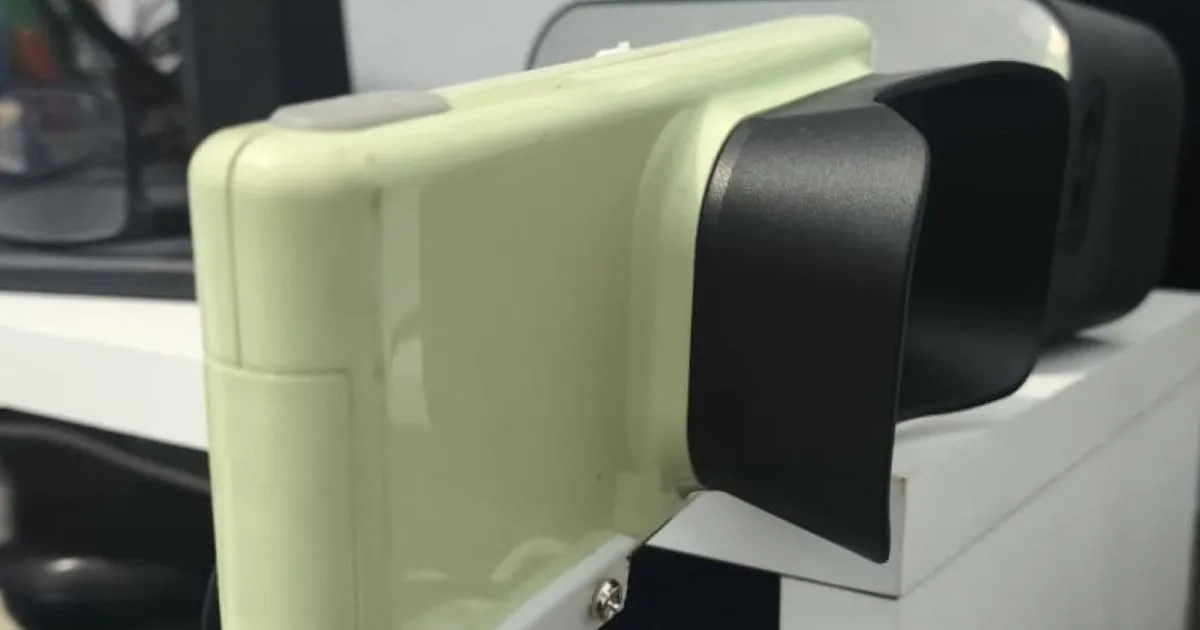
Responding to this challenge, the Student Creativity Program (PKM-KC) Team at Gadjah Mada University (UGM) has introduced a technological innovation called Orside: a Portable Fluorescence-Based Pre-Cancerous Lesion Detector with Deep Learning Convolutional Neural Networks (CNN). This tool is designed to accelerate the diagnosis process and improve the accuracy of early detection of oral cancer.
Team leader Heironymus Damar Jati Danisworo explained that Orside combines fluorescence technology with artificial intelligence. “We want to provide a solution that’s fast, convenient for patients, and accurate for medical personnel,” he said on Monday (October 6).
Technically, Orside utilizes blue fluorescence light to distinguish between healthy and abnormal tissue in the oral cavity. A mini camera connected via Bluetooth captures tissue images and then analyzes them using a CNN algorithm. This technology is capable of recognizing micro-patterns invisible to the human eye, thus improving diagnostic accuracy. “The analysis results are immediately stored in the cloud and can be accessed in real time by doctors,” added Aurelius Galih Arkananta from the Faculty of Engineering, Gadjah Mada University.
Beyond precision, Orside also prioritizes safety and comfort. Hikmat Sejati from UGM’s Faculty of Mathematics and Natural Sciences ensures the system interface runs smoothly, with analysis results clearly displayed through the app. “We want this tool to be easy to use in a variety of field conditions,” he said.
The Orside’s ergonomic and portable design features an ultraviolet (UV) sterilization system on its lid to prevent cross-infection between patients. “This procedure is much safer than conventional methods. We hope the public will be more aware of the importance of early oral examinations,” said Fatimah Islamia from the Faculty of Dentistry, Gadjah Mada University (UGM).
In the same way, Tyasa Dwi Bumi, a fellow faculty member, emphasized that early detection can significantly increase a patient’s life expectancy.
This innovation is the result of a cross-disciplinary collaboration between five UGM students: Heironymus and Aurelius from the Faculty of Engineering, Hikmat from the Faculty of Mathematics and Natural Sciences, and Fatimah and Tyasa from the Faculty of Dentistry. The Orside team was supervised by Dr. drg. Indra Bramanti, Sp.KGA(K), M.Sc. from the Faculty of Dentistry UGM.
According to Indra Bramanti, Orside is a tangible demonstration of the scientific synergy at UGM. “This innovation demonstrates the successful integration of engineering, dentistry, and computer science in creating a practical medical solution that has the potential to be implemented in primary healthcare,” he said. He hopes Orside can be a real contribution from UGM in reducing the death rate from oral cancer and strengthening the university’s role in bringing health technology to the wider community.