
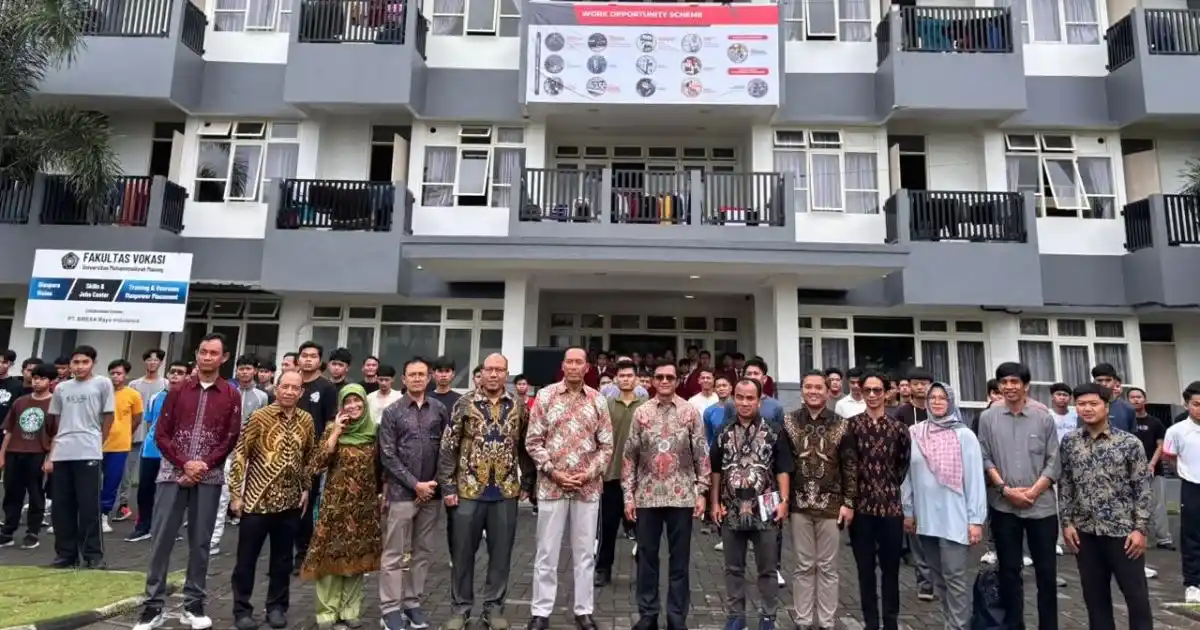
Malang. Indonesia is strengthening the SMK Go Global initiative through strategic partnerships with universities, including Universitas Muhammadiyah Malang (UMM).
The university has been recognized by government officials for its long-term commitment to preparing vocational graduates for global employment opportunities.
UMM has developed a dedicated overseas training center through its Career Boost program. Since 2019, the program has trained hundreds of participants through a blended learning model combining online sessions, residential practical training and industry certifications. As of 2025, UMM has successfully prepared 519 trainees for Japan, with 261 ready for departure and 279 still enrolled in online modules.
To improve global competitiveness, participants receive Japanese language proficiency certification and vocational skill certification. The program is open to trainees up to 28 years old, ensuring a wide recruitment base for international job markets.
UMM currently offers training for 15 key job pathways, including hospitality, construction engineering, nursing, food processing and caregiving. Through its collaboration with Brexa Academy, the university has expanded placement opportunities throughout Japan and aims to open pathways in up to 38 destination countries.
Nationally, the government is preparing to roll out the SMK Go Global program by late 2025, with a target of training 500,000 participants in 2026. The program is aligned with the President’s directive to supply skilled workers who meet industry demands in countries requiring talent in welding, manufacturing, caregiving, nursing, and hospitality.
Universities like UMM are expected to play a crucial role as training hubs, offering standardised modules, certification pipelines and direct placement support for graduates.
Why the SMK Go Global Program Matters
- Builds a stronger and more competitive Indonesian workforce
- Increases overseas placement opportunities for vocational graduates
- Strengthens collaboration between SMKs, universities and international employers
- Supports national goals for skilled labor exports
Next Steps for Stakeholders
- SMKs: Align curricula with industry needs and partner with certified training centers
- Universities: Expand training capacity and international partnerships
- Policy makers: Strengthen regulatory frameworks and placement support systems